A feed defined by your build.
Start with the decision your application needs to support. Define the records and evidence around it.
Custom feed planning brings technical requirements and commercial boundaries into one reviewable brief. No generic price or sample format can establish the coverage, rights, or delivery arrangement your project needs.
What to define
Define the universe
Name networks, native assets, token identifiers, and evidence relationships.
Choose the data contract
Specify fields, time semantics, history, corrections, and missing-value behavior.
Validate a useful sample
Agree acceptance cases, delivery recovery, permitted use, and scope boundaries.
Start narrow and measurable
Describe the consuming application and its first useful milestone. A fixed asset list and a maintained discovery service are different requests. Identify required and optional fields, acceptable unavailable states, and the exact historical view needed before discussing broader coverage.
Evaluate delivery patterns
A request-based interface, scheduled export, or stream may fit different workflows. Availability must be confirmed for the project. Define pagination or replay behavior, checkpoint handling, integrity checks, and failure states for the selected pattern instead of assuming all delivery methods are interchangeable.
Confirm commercial terms
Discuss licensed sources, retention, redistribution, model processing, support scope, and any operational requirements. Pricing is by agreed scope; this site does not publish fixed fees, grant access, or accept payment. A requirements conversation should never need a private key, recovery phrase, or production secret.
Review the internal methodology and protocol reference notes for the source concepts behind these guides.
Your use case. Your data contract.
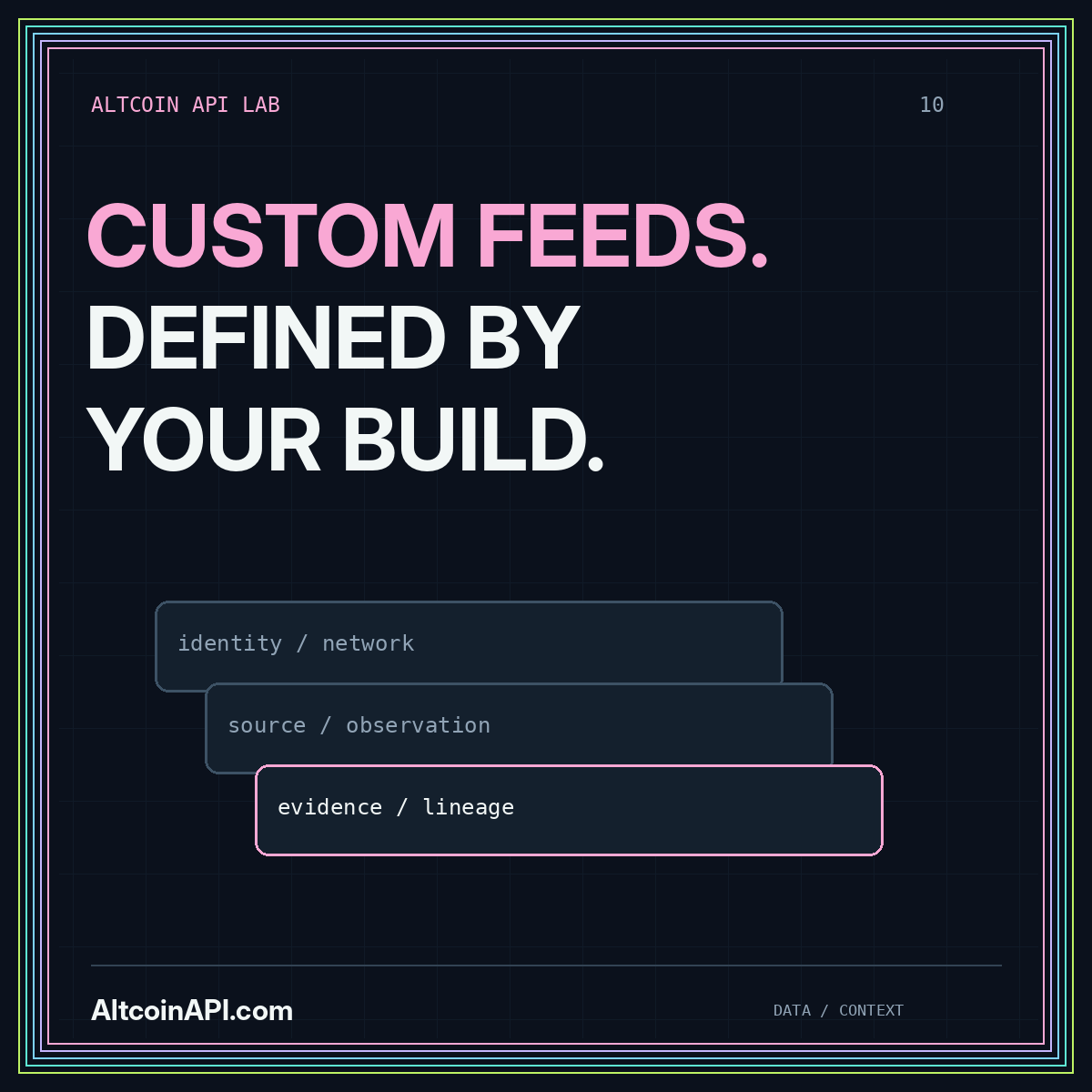
How to Specify a Custom Premium Data Feed
Turn a use case into an asset universe, field contract, delivery design, acceptance test, and commercial scope.
Read the guideHow to Specify a Custom Premium Data Feed
Turn a use case into an asset universe, field contract, delivery design, acceptance test, and commercial scope.
The full guide covers the decisions, limitations, and sample acceptance cases behind this data scope. Bring those questions into the brief before agreeing a production integration.
Read the complete guideYour next build starts with better data.
Define your assets, fields, evidence, and delivery needs. Start with a clear brief—not an assumed service package.